A private kind of value
There is a category of object that makes little sense to anyone except its owner. A chipped cup. A ticket from an ordinary evening. A shirt that has become too soft to resemble the thing it was when bought. Its value cannot be explained by its rarity or improved by a better product photograph. It has absorbed a life.
The things we keep complicate the idea that taste is simply a sequence of selections. Choosing matters, of course. But so does staying with something after its moment of novelty has passed. Style can be what remains after the impulse to replace has gone quiet.
This is not an argument that everyone should keep everything. Space is unevenly distributed. Moving is expensive. Some objects hold memories we would rather not preserve. Letting go can be thoughtful, practical, and freeing. The interesting question is not how much we own, but how we decide what deserves a place.
Wear as a record
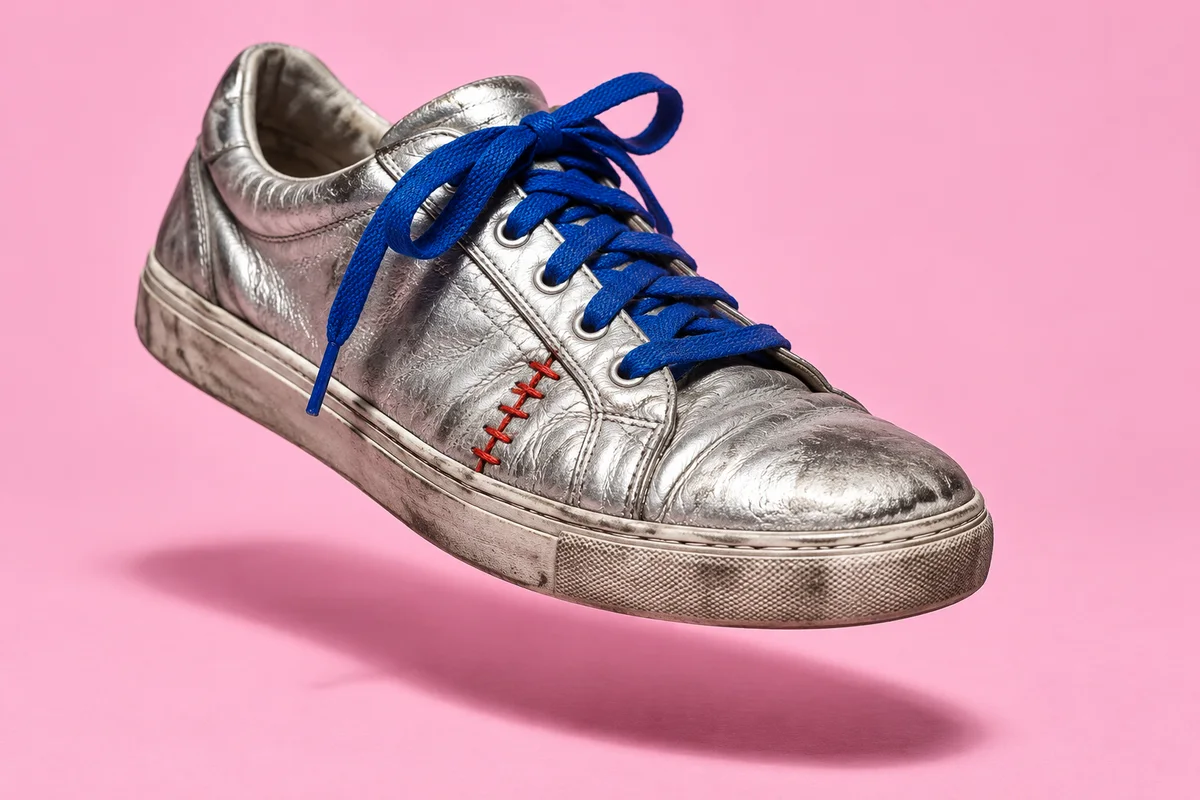
A new object arrives with possibilities. A used object carries evidence. A polished edge shows where a hand returns; a repair records a decision that the thing was worth continuing. These marks can make an object feel more particular, although they are not always beautiful and need not be romanticized.
The distinction between wear and manufactured wear is less a moral distinction than a difference in what the surface tells us. One describes an experience; the other evokes an idea of experience. Both can be visually compelling. Only one belongs to the actual history of the thing in front of us.
When a room is assembled purely to be seen, its objects may begin to act like a cast of supporting characters. Each one needs to communicate the right taste immediately. A room assembled through living has stranger priorities. Some things match. Others stay because they are useful, because someone made them, or because nobody has found a good reason to move them.
The case for an unphotogenic favorite
A useful test of attachment is to imagine that an object will never appear in a photograph. Would you still want it? The answer does not have to be yes every time. Decoration is a real pleasure. But the question makes space for preferences that do not require an audience.
Keeping something can be an active practice. Learn how to clean it. Find out whether it can be repaired. Change its use when its original purpose disappears. An old envelope becomes a place for loose notes. A jar becomes a vase. Not every reuse needs to become a clever project or a public statement.
There is also a kind of keeping that involves passing things on. Giving an object to someone who will use it may preserve more of its value than storing it indefinitely. Memory does not always depend on possession. Sometimes the story is enough; sometimes it helps to write the story down before the object leaves.
A personal style that allows for time will never be completely coherent. It contains former selves, practical compromises, gifts we would not have chosen, and a few inexplicable loyalties. That inconsistency is not necessarily a design problem. It can be the part that makes a place or a wardrobe feel inhabited. The objects that outlast the feed do not have to win our attention again each day. They have already earned a different kind of relationship.
This is an original opinion essay, not reported news. Examples are illustrative. Read our editorial approach.